
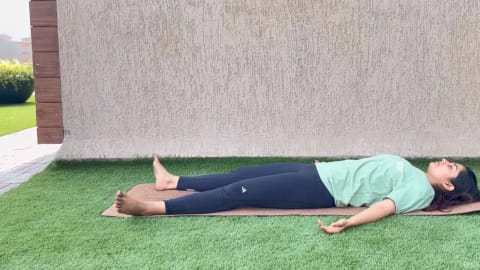
There is a difference between lying down and resting. Many of us lie in bed with the body still while the mind replays the day, rehearses tomorrow and scrolls through worries. Yoga nidrā is a way of teaching the whole system, body and mind, to rest at the same time.
What yoga nidra is
Nidrā means sleep. Yoga nidrā is often translated as "yogic sleep": a guided practice, done lying in śavāsana (the corpse pose, lying flat on the back), in which a teacher's voice leads attention through a sequence of stages while you remain relaxed and, ideally, aware.
The modern form most people know was developed and popularised in the twentieth century, drawing on older tantric and yogic practices of withdrawing the senses and moving awareness through the body. Today you will find many versions, short and long.
On Platonix, Tatwika's 10 minutes Yoga Nidra is a simple, accessible introduction. Its description is just four words, Reset your nervous system, and the whole practice takes place lying still in shavasana.
How a typical session unfolds
Different teachers structure yoga nidra differently, but most include some of these stages:
- Settling. Lying down, adjusting the body, a few slow breaths, permission to be still.
- **Intention (saṅkalpa).** A short, positive resolve held in the mind, such as "I am at ease."
- Body rotation. Attention moves quickly from one body part to the next, often right hand fingers, palm, wrist, and so on through the whole body.
- Breath awareness. Simply noticing the natural breath, sometimes counting it.
- Opposite sensations. Imagining heaviness then lightness, warmth then coolness.
- Visualisation. Calm images such as a sky, a river or a candle flame.
- Return. The intention is repeated, awareness comes back to the body and the room.
A ten-minute session usually focuses on the first few stages. That is enough to feel the difference.
Using yoga nidra at bedtime
When the aim is sleep, the practice becomes a gentle bridge from the busy day.
- Practise in bed, last thing. Lights low, phone set to do-not-disturb, audio at a soft volume.
- Let yourself drift. If sleep comes during the body rotation, let it.
- Keep it regular. The body learns the routine; after some nights the first few instructions alone may start to settle you.
- Pair it with a short wind-down. A few minutes of gentle stretching or a supported pose such as child's pose before lying down can help.
Using yoga nidra in the day
Many people also use a short yoga nidra in the afternoon to rest without napping deeply. In that case:
- Lie on a mat rather than a bed.
- Keep the room slightly cool and the light natural.
- Let the voice be your anchor; if you notice you are drifting into sleep, take a deeper breath and follow the next instruction.
A simple self-guided version (8 minutes)
If you have no recording to hand, you can practise a short version on your own:
- Lie down with legs slightly apart, arms a little away from the body, palms up. Close the eyes.
- Three slow breaths, each out-breath a little longer than the in-breath.
- Set an intention, a short positive sentence. Say it silently three times.
- Travel through the body: right hand, right arm, right side of the chest, right leg, then the left side, then the back, then the face. Spend one breath on each area, simply noticing it.
- Feel the whole body at once, lying heavy on the floor.
- Watch the breath for a minute without changing it.
- Repeat the intention, then gently move the fingers and toes and roll to one side before sitting up.
Who should be careful
Yoga nidra is gentle and suitable for most people. A few notes:
- If you have trouble lying flat (for example in later pregnancy or with some back problems), lie on your side with cushions, or recline.
- If visualisation or body awareness brings up distressing memories, open your eyes, feel your surroundings and stop. People with a history of trauma may prefer to practise with a trained teacher.
- Persistent sleep problems deserve proper attention: speak to a qualified professional rather than relying on relaxation practices alone.
Yoga nidra and a bedtime routine
Yoga nidra works best as part of a simple routine rather than a last-ditch attempt to fall asleep. Many people find a sequence like this helpful: screens off half an hour before bed, a warm drink without caffeine, a few minutes of gentle stretching, then yoga nidra lying in bed.
Making space for rest
There is something quietly radical about lying still on purpose and doing nothing else. In a culture of constant activity, ten minutes of yoga nidra is a reminder that rest is not laziness but part of a healthy rhythm.
Try it tonight
Tatwika's 10 minutes Yoga Nidra is on Platonix and fits easily into a bedtime routine. If you would like a gentle movement practice first, Day 7 of her beginner series pairs supported yin poses with alternate-nostril breathing, a lovely way to prepare for rest.