
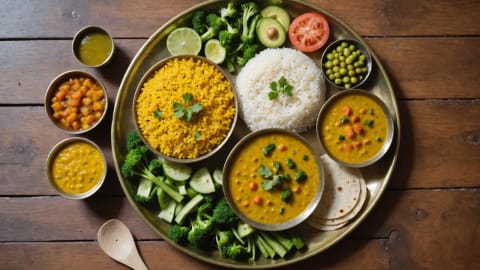
We eat several times a day, often while working, scrolling or talking, barely tasting what is on the plate. Mindful eating invites us to slow down and pay attention. The Indian traditions go a step further: they suggest that the kind of food we eat, and the way we eat it, shapes the state of the mind itself.
Food as more than fuel
A short video on the Thasmai channel on Platonix is titled Food is Knowledge. Its description presents food as fusing culture, history, science and spirituality in every bite, and suggests that by understanding our meals we cultivate mindfulness and a deeper connection to the earth, honouring the process of growing, preparing and sharing food.
That is a helpful starting point. A meal carries the work of farmers, the soil, the rain, the hands that cooked it. Remembering this is already a form of mindfulness.
The Gita's three kinds of food
The Bhagavad Gita's seventeenth chapter describes food according to the three guṇas, the qualities of nature:
- Sāttvika food (17.8) promotes life, vitality, strength, health, happiness and satisfaction. It is described as tasty, smooth, substantial and agreeable.
- Rājasika food (17.9) is excessively bitter, sour, salty, hot, pungent, dry or burning, and is said to bring discomfort, grief and disease.
- Tāmasika food (17.10) is stale, tasteless, spoiled or impure.
In a Platonix session titled The Vedic Framework for Life and Career, the speaker makes an observation about 17.8 that surprises many listeners. Krishna does not specify ingredients, he notes, and neither recommends nor forbids particular diets in this verse. Instead, he describes what food does to us: whether it adds to our longevity, strength, health and comfort. And in a line many will appreciate: "Tasty food can also be healthy food."
The same session links the qualities to everyday experience. Some foods leave us sluggish and drowsy, an increase of tamas; very spicy or stimulating food can push us into restless overactivity, an excess of rajas. The aim is the balance and clarity of sattva.
Eating with the seasons
The speaker also draws on an Ayurvedic principle of eating what is wholesome, in season and in the right quantity, and points to how Indian festivals traditionally pair foods with the season: warming sesame and jaggery around Sankranti in winter, cooling drinks around Ramanavami in the hot season. Going against nature, he suggests, can be unhelpful, for example eating lots of cooling foods in winter.
For readers in Switzerland, Germany or Austria, the same principle applies to local seasons: warming soups and root vegetables in winter, fresh salads and fruit in summer.
Mindful eating in practice
You do not need to change your whole diet to begin. Start with attention.
Before eating
- Pause. Take one breath before you start.
- Look. Notice the colours, textures and smells.
- Gratitude. Many traditions offer a short prayer or thanks before meals. Even a silent "thank you" brings you into the moment.
While eating
- No screens for at least one meal a day.
- Put the spoon down between mouthfuls.
- Chew slowly and notice how flavours change.
- Notice hunger and fullness. Stop when you feel comfortably satisfied, not stuffed. The session's quote of a classical verse warning against excess in both speaking and eating is a good reminder that moderation is an old idea.
After eating
- Sit for a moment before rushing on.
- Notice how you feel half an hour later: light and clear, or heavy and sleepy? Over time, this feedback teaches you more than any rulebook.
A simple sattvic plate
Without prescribing a diet, many people describe sattvic meals in terms like these:
- Freshly cooked rather than reheated many times.
- Whole grains, pulses, vegetables and fruit.
- Moderate spices.
- Eaten in a calm setting.
- In a quantity that leaves you comfortable.
Mindful cooking and sharing
Mindfulness does not start at the table. Preparing food can itself be a practice: washing vegetables with attention, noticing smells as spices warm, cooking without rushing. Many Indian households traditionally offer the first portion of a meal, to the divine, to a guest or to those in need, before eating. Whatever your background, the idea of offering and sharing turns eating from a private act into a moment of connection.
If you live alone or eat on the go, even a small ritual helps: set the table properly once a day, or eat sitting down rather than standing in the kitchen.
Body and digestion
The Tatwika channel's Yoga for better gut health offers simple asanas many people use to feel more comfortable around digestion. Gentle movement, regular meal times and not eating too late are all part of the same picture.
A note on health
The Gita and Ayurveda describe food in terms of qualities and balance, not as medical treatment. If you have a medical condition, allergies or specific dietary needs, or are considering major changes to your diet, please consult a qualified health professional or registered dietitian.
Try it today
Choose one meal today to eat without a screen, beginning with a pause and a moment of thanks. Then watch Thasmai's Food is Knowledge on Platonix, or the longer session The Vedic Framework for Life and Career, where these ideas are set within a much broader vision of a balanced life.