
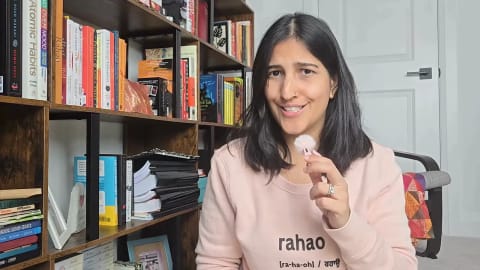
There is a small word in Sikh scripture that carries a large teaching. In many hymns of the Guru Granth Sahib, one line is marked Rahāo. It signals a pause: stop here, this is the heart of it, reflect. Rahao Wellness, a channel on Platonix, takes that word as the basis for a simple, modern approach to stress.
What rahao means
In the Guru Granth Sahib, Rahāo is generally understood to mean "pause" or "stay", and the line it marks is often regarded as the central idea of the hymn. Readers and singers pause on it to let its meaning sink in.
Rahao Wellness draws on this idea of the sacred pause between verses. One of its first reflections, Stress vs. Stressors, invites viewers to slow down, breathe and discover where calm truly lives. Its short Meaning of Rahao adds an honest observation: Rahao is simple to say but not always easy to practise, because most of the time we think we are pausing while the mind keeps racing, planning and reacting. True reflection takes awareness and intention.
Stress and stressors
A helpful distinction from the same channel: a stressor is the event, a deadline, an argument, a delayed train. Stress is what happens inside us in response. The takeaway offered in Stress vs. Stressors is that you cannot control every stressor, but you can choose how you meet it.
This is not a call to suppress feelings or pretend everything is fine. It is a reminder that between the event and our reaction there is a gap, and a pause widens that gap.
Pause, then reflect
The Rahao Wellness video Pause & Reflect to Stop Stress breaks the practice into two steps.
1. Pause, and pause early
The video points out a common pattern: we wait. We wait for the weekend for self-care, wait until we are close to burnout, wait until it is almost too late. An effective pause catches stress the moment it arises, before it grows.
Early signs worth noticing:
- Shallow or held breath.
- Tight jaw, raised shoulders, a knot in the stomach.
- Rushing, clipped speech, irritation over small things.
- A familiar loop of anxious thoughts.
When you notice one, stop. Even three slow breaths count.
2. Reflect, rather than race
A pause on its own can simply become a short break before the mind races again. The second step is to reflect. The video suggests three directions:
- Why am I stressed? What exactly is the stressor, and what story am I telling about it?
- What is happening in my body? Name the sensations.
- What is truly important right now? Separate what matters from what is merely urgent.
Together, pause and reflect help you step out of autopilot and respond intentionally.
Sitting with not knowing
One Rahao Wellness short, Seeking advice does not work, offers a subtle variation. Sometimes, it suggests, asking others is a way of escaping the discomfort of not knowing. Clarity is not rushed; it is revealed when we pause long enough to listen inward.
That does not mean never asking for help. It means noticing whether we are seeking guidance or simply fleeing uncertainty, and allowing a little more stillness before deciding.
A three-minute rahao practice
Use this whenever you notice stress rising:
- Stop (30 seconds). Put down what you are holding. Feel your feet on the floor.
- Breathe (1 minute). Slow breaths, with the out-breath a little longer than the in-breath.
- Name (30 seconds). Silently name what is here: "tension in my shoulders", "worry about the meeting".
- Reflect (1 minute). Ask: what is truly important right now? What is one helpful next step?
Then continue, and notice whether you meet the situation differently.
Bringing rahao into your week
- Scheduled pauses. Two or three short reminders a day that simply say "rahao".
- Transition pauses. Before entering home after work, sit in the car or on the stairs for one minute.
- Conversation pauses. In a heated moment, take one breath before replying.
- Weekly reflection. On one evening a week, look back: when did I pause well, and when did I miss it?
Why early pausing matters
There is a practical reason to catch stress early. A small irritation is easy to notice and release; a full-blown reaction is much harder to step out of. Learning to notice the first signals, the tightening breath, the quickened pace, the sharp tone, is like noticing a spark before it becomes a fire.
This takes practice. At first you may only notice afterwards: "I snapped at my colleague an hour ago." That is still progress. Gradually the noticing moves closer to the moment itself, until one day you catch it as it begins.
A respectful note
Rahao has a sacred place in Sikh scripture and practice. Using it as inspiration for everyday reflection, as Rahao Wellness does, can be a way of honouring its meaning. If you would like to understand its role in the Guru Granth Sahib more deeply, learning from Sikh teachers and sources is the best path.
And if stress has become constant or overwhelming, a pause practice is a good companion, but please also reach out to a qualified professional.
Start pausing
Watch Rahao: Pause & Reflect to Stop Stress on Platonix, then choose one moment today, perhaps the next time your phone buzzes, to practise a single, full pause.