
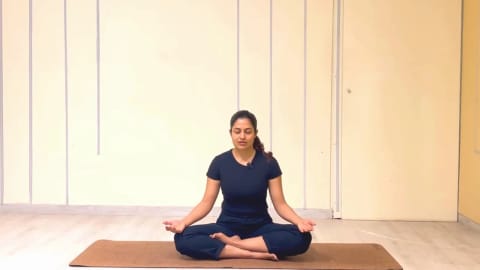
Starting yoga can feel like walking into a room where everyone already knows the steps. The truth is that every practitioner began with a stiff body, a wandering mind and a few awkward first attempts. What helps most is a clear, gentle structure.
The Tatwika channel on Platonix (Mindful Moves with Tatwika) offers a seven-day beginner series that is a good model of that structure. Each day takes between about fifteen and twenty-five minutes and focuses on one theme. Below is an outline of how such a week can unfold, what each theme is for, and how to practise it safely.
Before you begin
What you need
- A non-slip mat on a firm floor.
- Clothes you can move and breathe in.
- A cushion or folded blanket.
- About twenty minutes when you will not be interrupted.
When to practise
Practise on an empty or light stomach, ideally two to three hours after a main meal. Mornings suit many people; others prefer early evening to unwind.
Safety first
Yoga should feel like effort without strain. Move slowly, breathe through the nose where comfortable, and back off at any sharp or pinching pain. If you are pregnant, recovering from injury or surgery, or have a heart condition, high blood pressure, or back, neck or joint problems, check with a qualified professional before starting and tell your teacher.
Day 1: Easy full-body stretch
The first session simply wakes the body up. Tatwika's Easy Full Body Stretch opens in a comfortable seated position, moves through gentle neck and spine movements, standing forward bends and lying stretches, and ends in rest.
The aim on day one is not to achieve postures but to notice how your body feels: where it is tight, where it moves easily, how the breath changes when you stretch.
Day 2: Hips and lower body
Long hours of sitting tend to leave the hips and legs stiff. Day 2 focuses on hip mobility and lower-body strength, combining gentle openers with poses that build stability in the legs.
Tip: In hip work, the knees are the joints to protect. If a pose twists or strains the knee, ease out and use a cushion for support.
Day 3: Core strength and stability
A stable core makes everyday movements easier, from carrying shopping to getting up from the floor. Day 3 introduces core work. Keep the breath flowing; holding the breath during effort is a common beginner habit worth unlearning.
Day 4: Upper body strength and mobility
Shoulders, arms and upper back get attention on day 4. For desk workers this can be the session that feels most immediately useful. Move the shoulders within a pain-free range and build strength gradually.
Day 5: Balance and focus
Balance poses bring the mind sharply into the present: the moment you think about something else, you wobble. Tatwika's Day 5 session frames this as building clarity, stability and resilience.
Tip: Practise near a wall or a chair. Fixing your gaze on a still point in front of you (in yoga called dṛṣṭi, a focused gaze) helps enormously.
Day 6: Deep stretching
By day 6 the body has warmed up over several sessions. Deep stretches are held a little longer, inviting release of stored tension. Go slowly, ease into each stretch and never bounce.
Day 7: Yin yoga and alternate-nostril breathing
The week closes with slow, supported yin poses and a breathing practice called anuloma viloma (alternate-nostril breathing). Yin poses are held for longer with the muscles relaxed, often with a cushion for support. The breathing practice at the end calms and balances, a fitting way to finish a week of effort.
Anuloma viloma is usually gentle. Keep it without breath retention at first, and stop if you feel dizzy.
What to expect after a week
People often notice small things: getting up from the floor more easily, a looser neck, a calmer evening, a little more awareness of posture during the day. You will not be "done" with any of the themes; that is the point. Each of them is a doorway you can return to.
Making it a habit
- Same time, same place. Routine reduces the effort of deciding.
- Repeat the week. A second round of the same seven days is often more valuable than moving straight to something new.
- Keep a short note. One line after each session: what felt good, what felt hard.
- Rest when you need to. Soreness that lingers is a sign to ease up, not push harder.
Beyond the physical
Yoga in its traditional sense is more than exercise. Patanjali's Yoga Sūtras describe eight limbs, of which posture (āsana) is just one; breath regulation, ethical living, concentration and meditation are others. Many people find that a regular physical practice naturally draws them towards these deeper aspects over time.
Start your first week
All seven days of Tatwika's 7 Day Beginner Yoga series are available on Platonix. Begin with Easy Full Body Stretch | Day 1 tomorrow morning, or join a live yoga session where a teacher can guide your alignment in real time.